Furniture Design & Inspiration
How wooden furniture earns its place in a room: proportion, layout, light, and the pairing of grain with texture.
Design starts with proportion, not decoration
A room looks “designed” when the sizes of things relate to each other and to the space. Three proportions to respect:
- Rug and table. A coffee table should sit on a rug that extends at least 45–60 cm past it on every side, or the whole group feels untethered.
- Table and sofa. A coffee table roughly two-thirds the length of the sofa balances a seating group.
- Wall and furniture. Leave 30–45 cm of breathing space on either side of large pieces so they do not jam against the walls.
The wood-and-texture pairing rule
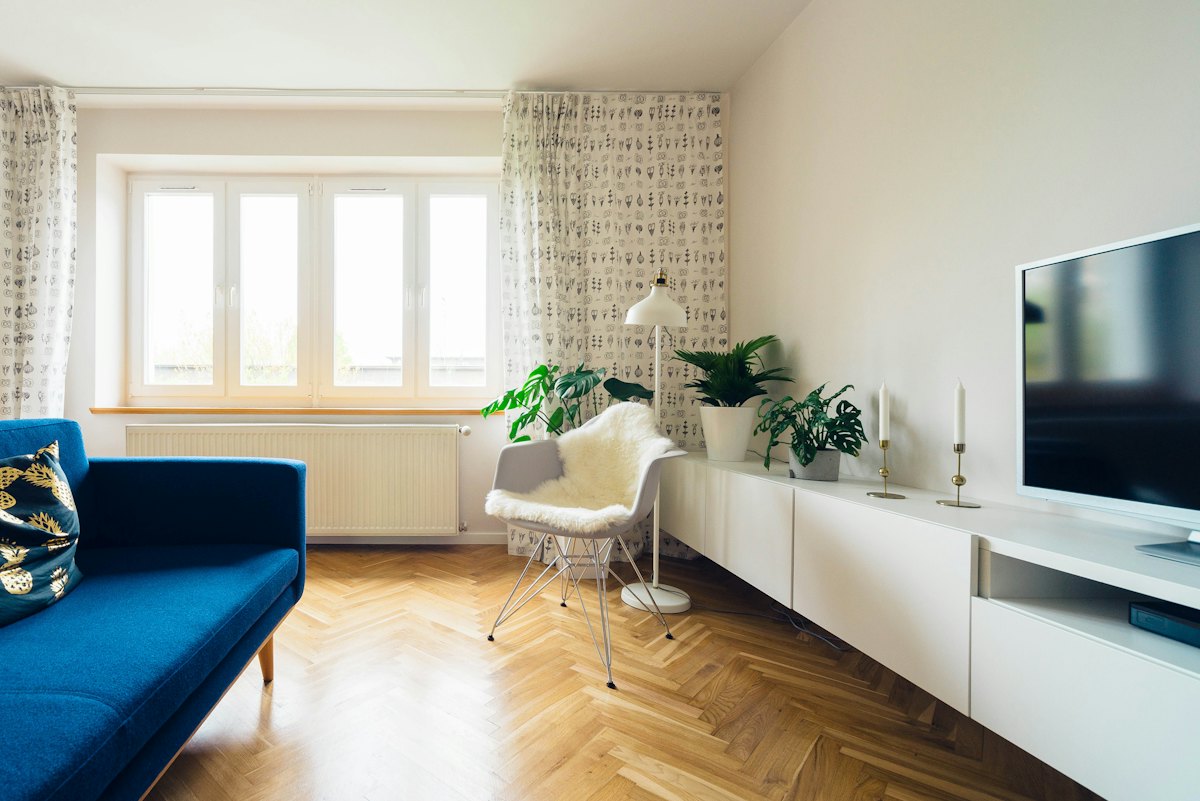
Wood's weakness is a room made entirely of wood tones nodding at each other. Break the monotony with contrasting texture:
- Linen, wool, and boucle soften hard surfaces.
- Warm metals (brass, bronze) and stone accents echo wood's natural warmth.
- Deep plant greens and cream walls let mid-tone woods read clearly.
If you mix woods in one room, keep common ground: same tone family, or a repeating grain scale. A walnut table beside pale ash sits fine when both are honest about what they are.
Room-by-room inspiration
Living room
Anchor with one substantial wooden piece — a solid coffee table or a media credenza — and let the seating be soft. Place a console behind the sofa for lamps and books; it adds function and layers the room. Shelving bands on one wall provide rhythm without closing the space in.
Bedroom
Wooden bed frames look most restful with soft bedding and one or two table lamps at eye level. Nightstands should relate to the headboard, not fight it. A dresser angled slightly off the wall or finished in the same tone as the frame pulls the room together.
Home office
A wooden desk against a painted wall with a shelf above keeps the visual load low. Use the desk top for one living thing (a plant) and one warm light, and hide the rest. The calm comes from what is not on the desk.
Small spaces
Light finishes and tall, slim shelving make ceilings feel higher. Wall-mounted desks and fold-away tables free the floor, which reads as space. Choose one secondary colour and repeat it in textiles so the room feels composed rather than cluttered. More ideas in our living room layout article.
Lighting as furniture
The cheapest redesign in any room is proper light. Wooden furniture looks different at 2700 K than at 4000 K; warm light flatters oak and walnut, while cool light flattens them. Use floor lamps for reading corners, wall sconces to create pools of light over tables, and dimmers to shift the mood between work and rest.
Common styling mistakes to skip
- Matching every wood in the room identically — sameness reads as showroom, not home.
- Squeezing too many small tables into corners — keep one good piece per corner.
- Buying art to scale of the wall rather than the sofa above which it hangs.
- Ignoring traffic lines — no design survives a chair that blocks the door every day.
The most powerful styling device in furniture design is restraint: one fewer piece, two fewer tones, a gap left open. Wood does the rest.