Living Room Layouts That Gain Space
A practical walk-through of making a modest living room feel bigger — without buying wallscreen sofas or surrendering your floor.
Rooms rarely feel small because they are too small. They feel small because the furniture fights the layout. This article walks through the five decisions that make the difference, from traffic lines to the one piece worth buying.
1. Map your traffic first
Before choosing anything, watch how the room is really used for a week. Where do people walk from the door to the sofa? From the sofa to the kitchen and the window? Every piece of furniture that sits on a daily path will be moved, hated, or tripped over eventually.
Draw the floor plan to scale — a pencil grid is fine — and mark the walking lines. Keep at least 60 cm clear on everyday paths, and 90 cm where two people pass or where you carry plates through. Then place furniture around those lines, not across them.
2. Choose one anchor, not six
Small living rooms fail from accumulation: a sofa, an armchair, a loveseat, two tables, a bookshelf, a media cabinet, and a plant stand all claiming the same floor. Pick one anchoring piece — usually the main sofa or a substantial wooden coffee table — and build everything else around it in service roles.
The anchor should be sized to the room, not to the store. A 2.4-metre three-seater in a 3-metre room usually reads better than the five-seater that fits along the wall but swallows the walking room.
3. Move the storage vertical
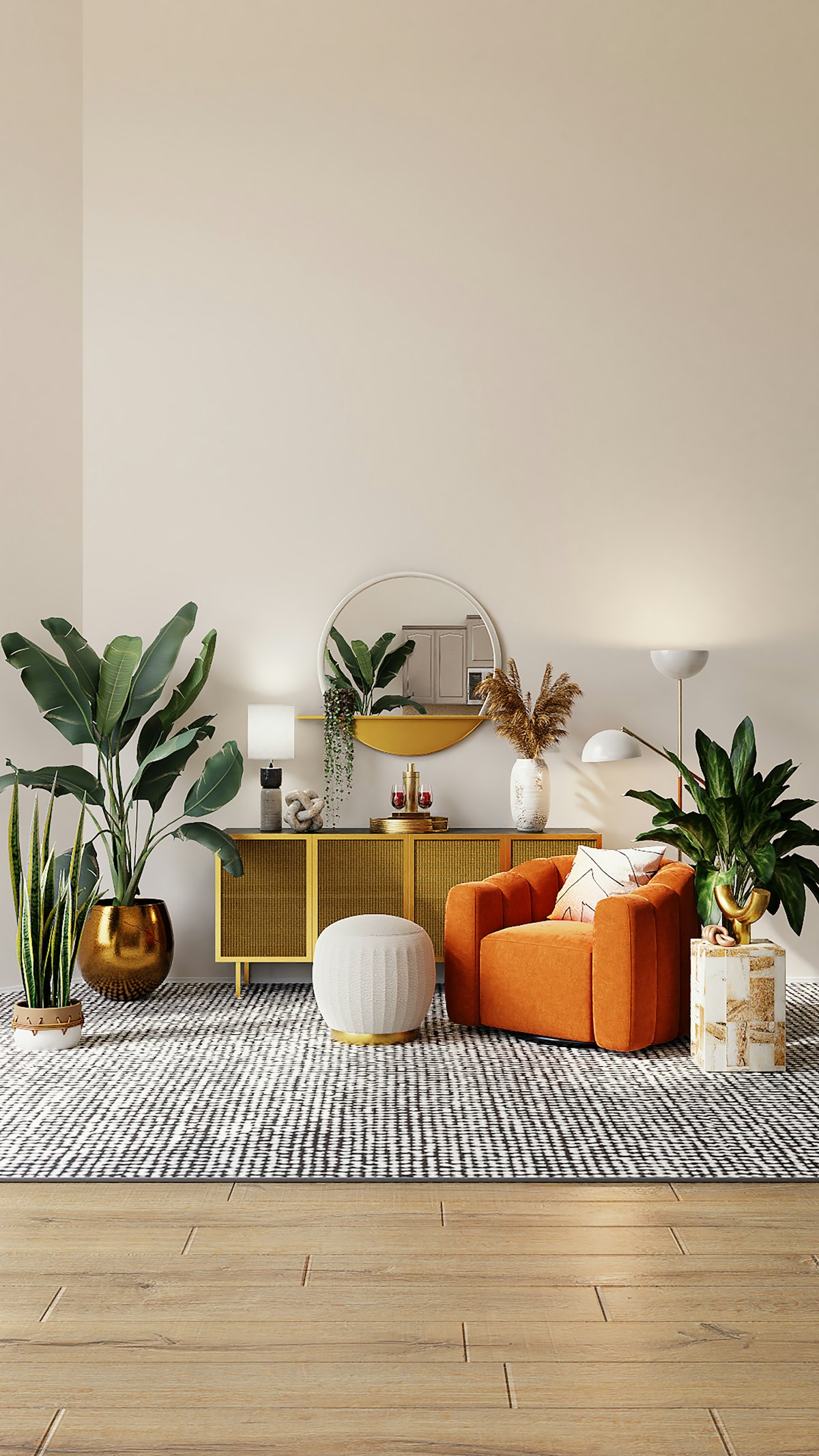
The fastest space win in any small living room is moving storage from floor spreading to wall climbing. A floor-to-ceiling wall unit, or a run of shelves above a low console, stores the same objects in a fraction of the floor footprint.
Two rules keep vertical storage from becoming a mess wall: keep frequently used items at arm-and-eye height, and give closed cabinets a share of the run so the open shelves are not the only home for clutter.
4. Use fold-away honestly
Fold-away desks, drop-leaf tables, and wall-mounted writing surfaces shine in living rooms that double as offices or dining rooms. The honest rule: a folding piece is only space-saving if it folds when not in use. If the fold-out table will sit open six days a week and the desk will live down, buy the piece that supports that reality — a permanent narrow desk is far better than a speculative transformer.
When you do buy fold-away, spend on the hardware: decent folding hinges, gas lifts rated for real weight, and wall fixings into studs. See our space-saving guide for details.
5. Light the edges, not the centre
Deep ceiling light flattens a room and throws its smallness into focus. Instead, light the edges: a floor lamp beside the reading chair, sconces over the console, a small lamp on the table. Pooled light creates the impression of several distinct zones, which reads as more space than one over-lit box.
The one piece worth buying
If a small living room gets one splurge, make it the coffee table. A solid hardwood table with a shelf beneath consolidates snacks, remotes, books, and games — absorbing the function of two small tables and a basket — while anchoring the whole seating group. Wood's warmth keeps the room feeling furnished rather than cramped.
A small room is like a small suitcase: it is not about fewer items, it is about smarter packing. Vertical storage, honest fold-aways, and one strong anchor pack a room properly.