Living Room Furniture
The wooden pieces that make a living room usable and warm: tables, consoles, media storage, shelving, and a few well-chosen accent pieces.
Start with the jobs, not the look
A living room works when every wooden piece earns its spot. Begin by listing what the room must do: host four people for dinner, carry a wide-screen TV, hide a router and cables, store books, or offer a quiet reading seat. The furniture list writes itself from there — and the pieces nobody listed are usually the ones you should skip.
Coffee tables and consoles
The coffee table is the workhorse of the room. A solid wood tabletop on a simple frame is hard to beat: it takes heat, spills, and dropped remotes, and it can be re-sanded in ten years. For small rooms, consider tables with a shelf or drawers beneath — but keep the depth sensible so knees still fit under it from the sofa.
Sofas are typically 40–46 cm tall at the seat. Choose a coffee table 10–15 cm lower than the seat cushion, and leave 40–45 cm between the sofa and the table for comfortable reach and passage.
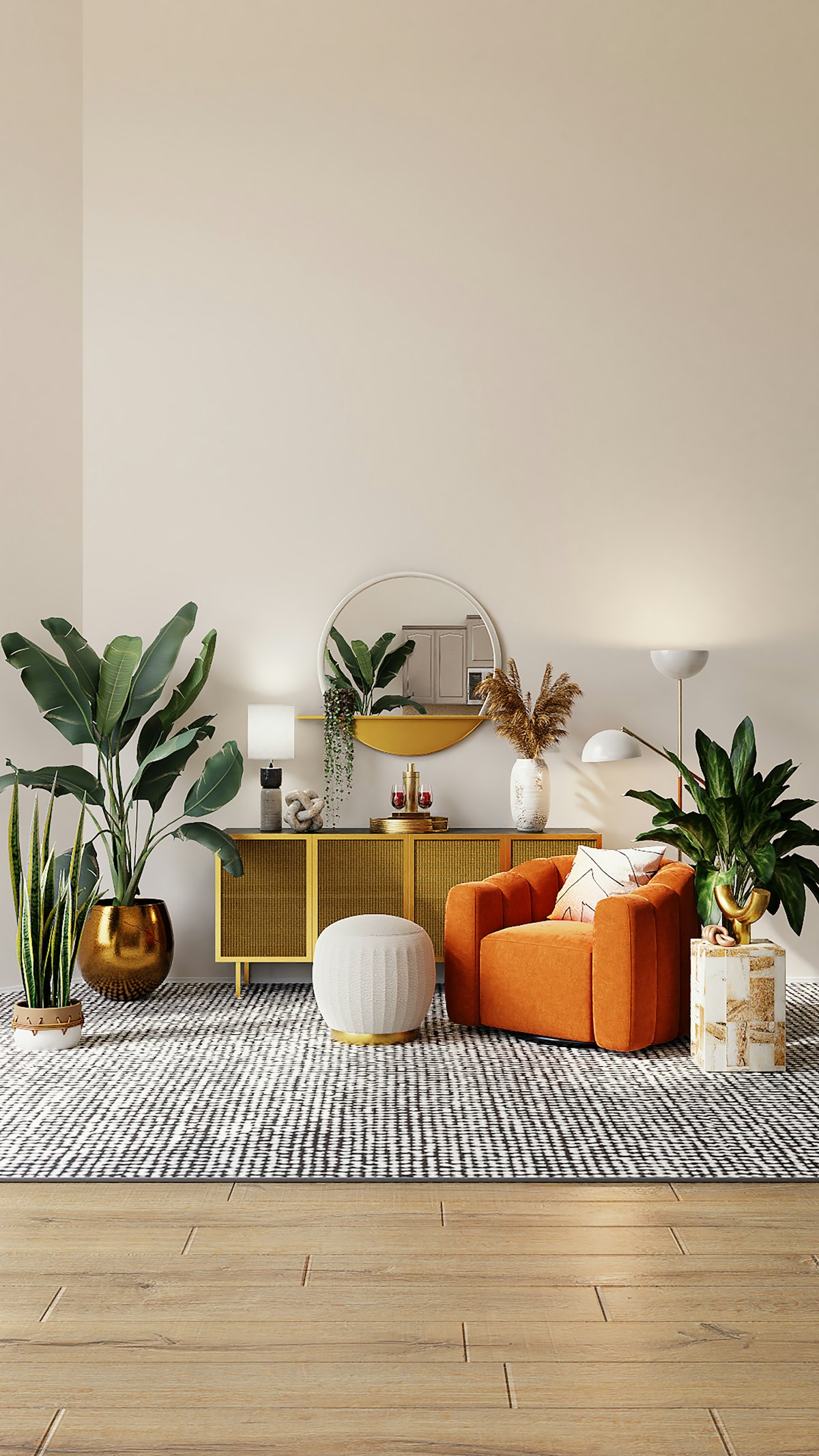
Media units and living-room storage
Media furniture fails in two classic ways: it is built too shallow for the equipment or too short for the screen. Measure before you imagine:
- Depth — most AV components need 45–60 cm of usable, ventilated depth, not 35 cm.
- Cable access — cut-outs, grommets, or a gap at the back are worth paying for.
- Weight — a solid wood or robust plywood carcass carries large screens and amplifier stacks without sagging.
For the living room, open shelves plus a couple of closed cabinets beat a wall of glass-fronted doors: things that gather (cables, boxes, chargers) hide behind closed fronts, while the daily-use items stay visible where they are easy to grab.
Shelving that fits the room
Two approaches to wooden shelving:
- Built-in style units that run wall-to-wall and floor-to-ceiling give a small room enormous storage without eating floor space. They are best made from plywood or engineered board for dimensional stability.
- Freestanding bookcases are flexible and repairable; a quality unit in solid timber can move with you for decades.
Whichever you choose, account for real weight: a shelf of hardcover books is heavy. Insist on shelf thickness and cross-bracing proportional to the span, and always anchor tall units to the wall.
Wooden seating and accent pieces
Wood-armed sofas, lounge chairs, stools, and benches bring warmth that upholstery alone rarely manages. When choosing:
- Check the arm height is comfortable against your shoulder when seated.
- Ask how the frame joints are made — tenons and dowels beat staples and glue alone.
- For stools and benches used at counters, verify the height against your counter or table, not an interior photo.
Materials worth prioritising here
Solid hardwood (oak, walnut, maple, ash) for tables and any piece that takes daily wear; good plywood for shelving and cabinet carcasses; veneer over stable cores for large table tops where a book-matched grain is the goal. Avoid ultra-thin tops on long spans, and ask about expansion gaps on tabletops wider than about 90 cm.
Proportion beats price in living rooms. A slightly smaller solid table fits a modest room better than a grand statement that squeezes the traffic flow.